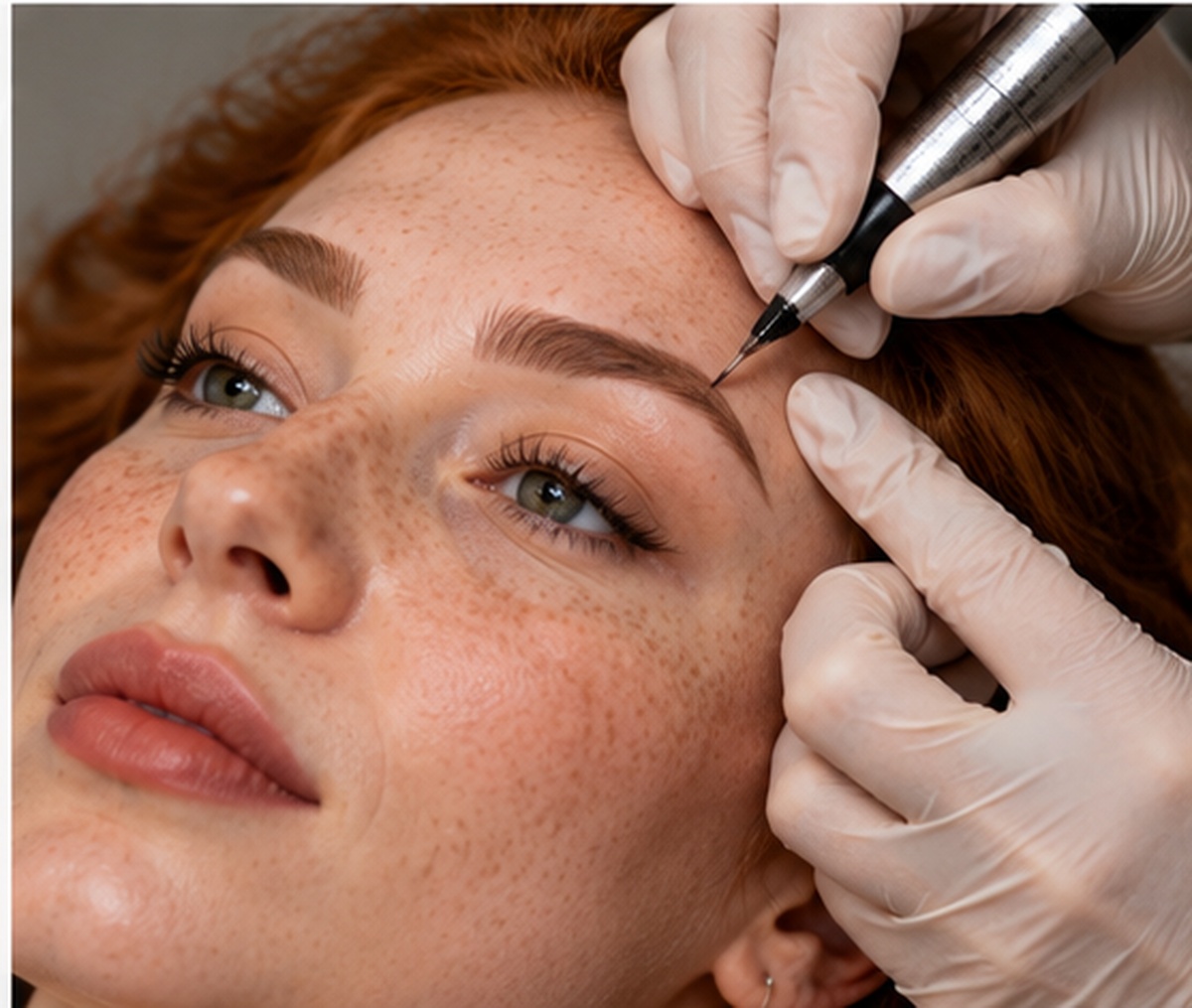
The Eyebrow Tattoo That Finally Looks Like Real Brows
Say the words eyebrow tattoo to someone who remembers the 1990s and they may picture a hard, solid block of colour that faded to an unnatural blue or green. That reputation kept many people away from brow tattooing for years, and it is completely out of date. Today's eyebrow tattoo looks like real brow hair, because the techniques, the machines, and the pigments have changed entirely. A modern eyebrow tattoo done well is soft, dimensional, and so natural that most people cannot tell it is there. At Xtremities Tattoo and Piercing in Mississauga, that natural result is the whole point.
For anyone in Mississauga frustrated by sparse, over-plucked, uneven, or fading brows, a modern eyebrow tattoo offers something makeup cannot: brows that are always there, always even, and always ready. Understanding how today's eyebrow tattoo works, and the different techniques behind it, is what helps a person choose the right one for their face.
Old Brow Tattoos Turned Blue for a Reason
The unnatural blue and green of old eyebrow tattoos came from traditional tattoo inks, while modern permanent makeup uses medical-grade pigments formulated to fade uniformly and true to tone, which is why today's eyebrow tattoo looks natural.
Nano Brows Trade the Blade for a Machine
Nano brows create hair-like strokes with a digital machine and a single fine needle instead of a hand blade, causing less skin trauma and retaining well across many skin types, which is why they have become a leading eyebrow tattoo technique in 2026.
The Brow Is Mapped Before Any Pigment
A experienced artist maps the eyebrow tattoo to the face's bone structure and proportions and has the client approve the drawn shape before beginning, which is why a well-done brow looks balanced and belongs on the face.
Why Modern Eyebrow Tattoo Looks Natural
The reason a modern eyebrow tattoo looks like real brows comes down to three changes. First, the techniques now mimic natural brow hair rather than filling in a solid shape, using fine strokes or soft shading that follow the brow's real pattern. Second, the pigments are medical-grade and colour-matched to each client, formulated to fade uniformly and true rather than shifting into the blue or green undertones of old tattoo inks. Third, the application is deliberate and shallow, placed in the upper skin for a soft look that heals naturally. Together, these are why a Mississauga eyebrow tattoo today reads as brows, not as a tattoo.
The design is as important as the application. Before any pigment is placed, the artist maps the brow to the face, using its natural bone structure and proportions to design a shape that suits the individual. This anatomical mapping is why a well-done eyebrow tattoo looks balanced and belongs on the face. A client approves the mapped shape before the work begins, so there are no surprises. The artists at Xtremities take this mapping seriously for every Mississauga client, because the shape makes or breaks the result.
Brow work is an umbrella term that covers several techniques, each creating a slightly different look. Microblading uses a fine hand tool to create crisp, hair-like strokes, giving a very natural, textured brow that suits many skin types. Nano brows use a digital machine with a single fine needle to create similar hair strokes with less skin trauma, which makes them a strong choice for a wide range of skin types, including oily skin. Ombré powder brows use a machine to build a soft, shaded gradient that looks like a lightly filled-in brow, ideal for those who like a defined, made-up finish. Combo brows blend strokes and shading for brows that have both hair-like texture and soft density. An experienced artist helps each client choose among these based on their skin, their features, and the look they want.
The 2026 trend in Mississauga has moved toward machine techniques like nano brows, because they create crisp strokes with less trauma to the skin and tend to retain well across the diverse skin types in the region. That said, the right technique is always the one that suits the individual client, which is why a consultation matters more than a trend. Xtremities offers the full range so the choice fits the person, not the fashion.
What to Expect From the Process
An brow tattoo appointment begins with a consultation and mapping, followed by pigment selection suited to the client's skin tone and hair colour. A topical numbing agent keeps the session comfortable, and the brows are created with the chosen technique using single-use sterile cartridges or blades. The whole process is methodical, because accuracy in shape and symmetry is what makes the result look right.
Healing takes a few weeks and follows a predictable pattern. Immediately after, the brows look darker and bolder than the final result. Over the first week or two, the skin heals and flakes lightly, and the colour softens considerably, sometimes looking faint before it settles. The true colour appears at around four to six weeks, which is why a touch-up is scheduled after healing to perfect the strokes, shape, and saturation. From there, an brow work generally lasts one to three years before a refresh, depending on skin type and lifestyle. The team at Xtremities guides every Mississauga client through aftercare so the brows heal crisp and even.
Done Safely in Mississauga
An brow tattoo breaks the skin, so it must be done in a safe, licensed setting. In Mississauga, that means a studio compliant with Ontario Regulation 136/18, inspected annually by Peel Public Health, displaying a health inspection disclosure sign, using single-use sterile cartridges and blades, and working with pigments that meet Health Canada safety standards. Xtremities Tattoo and Piercing meets all of these requirements, so a client's brow work is both beautiful and safe.
Who an Brow tattoo Helps Most
An brow work makes the biggest difference for certain people. Those with sparse, thin, or over-plucked brows gain fullness and shape they cannot get from makeup alone. Those with uneven or asymmetrical brows gain balance, because the artist maps both brows to match. People who have lost brow hair to age, alopecia, or medical treatment such as chemotherapy regain a natural-looking brow, which can be deeply meaningful. Busy people who are tired of drawing brows every morning gain time and consistency. And anyone whose brow makeup smudges or fades through the day gains a look that holds. For all of these Mississauga clients, an brow tattoo solves a daily frustration in a lasting way.
It is also worth saying who should wait or consult first. Pregnancy, certain skin conditions in the brow area, and some medications or treatments can mean postponing or checking with a doctor before an brow work. A responsible artist screens for these during the consultation rather than proceeding regardless, which is part of what makes a licensed, professional studio the right choice. Xtremities assesses each Mississauga client honestly before booking the procedure.
Caring for a New Brow tattoo
Aftercare has a real effect on how an brow work heals and lasts, so following the artist's instructions matters. In the healing period, the brows should be kept clean and dry as directed, protected from heavy sweating, swimming, saunas, and direct sun, and never picked or scratched as they flake, because disturbing the skin can pull out pigment and affect the result. Gentle care during these weeks is what lets the strokes heal crisp and the colour settle evenly. The artists at Xtremities give every Mississauga client clear, simple aftercare guidance, because the client's care in the first weeks protects the investment and the look.
Because an brow tattoo lives on the face for years, where it is done matters as much as the decision to do it. In Mississauga, a client should choose a studio that is licensed, compliant with Ontario Regulation 136/18, and inspected by Peel Public Health, with the health disclosure sign on display. Beyond safety, the artist's skill is what determines the result, so look for a portfolio of healed brows, ask which techniques are offered, and choose a studio that consults and maps carefully rather than rushing. An brow work is a personal, lasting result, and it deserves an artist who treats it that way. Xtremities Tattoo and Piercing offers the full range of brow techniques in a licensed Mississauga studio, with experienced artists who design each brow to suit the individual, which is why clients across the GTA West trust it with their brows.
For Mississauga clients who have filled in their brows with a pencil every morning for years, the appeal is simple: brows that are already there, already even, and already shaped the moment they wake. Done by an experienced artist in a safe studio, modern brow tattooing delivers exactly that, with a softness and realism that the harsh techniques of the past could never achieve, which is why the service has earned a loyal following across the GTA West.
The best way to see whether it suits you is a conversation with an artist who can assess your brows and explain your options honestly, with no pressure and no rush.
For the right client, it is one of those rare improvements that pays back a little ease and confidence every single day, for years to come, long after the small investment of a single appointment has been forgotten and the brows simply feel like a natural part of the face.
A modern brow tattoo has nothing in common with the harsh brow tattoos of decades past. Done by a experienced artist in a licensed Mississauga studio, it gives natural, even, lasting brows that look like your own. To see what a modern brow work could do for you, contact Xtremities Tattoo and Piercing in Mississauga at (905) 897-3503 to book a consultation.
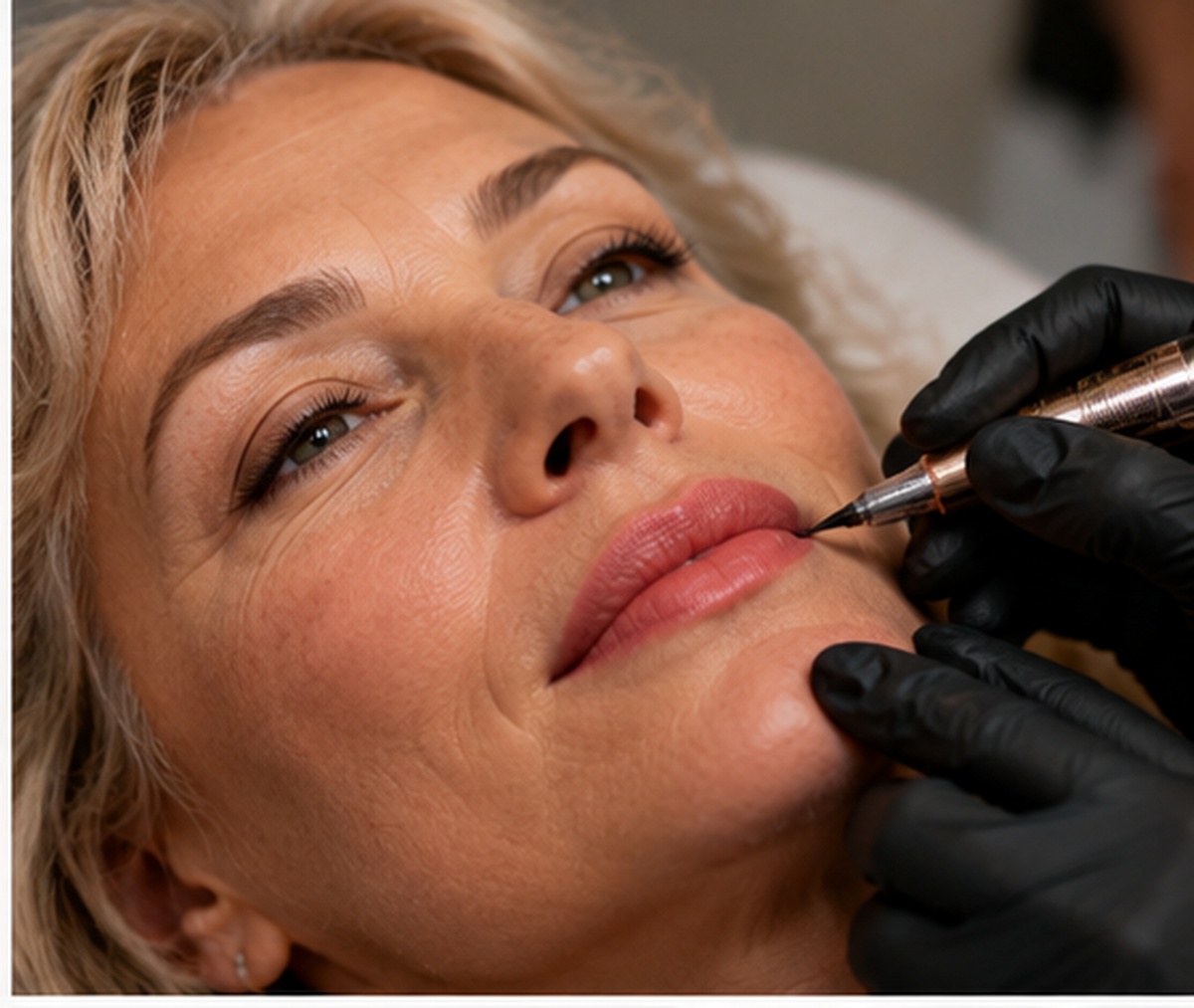
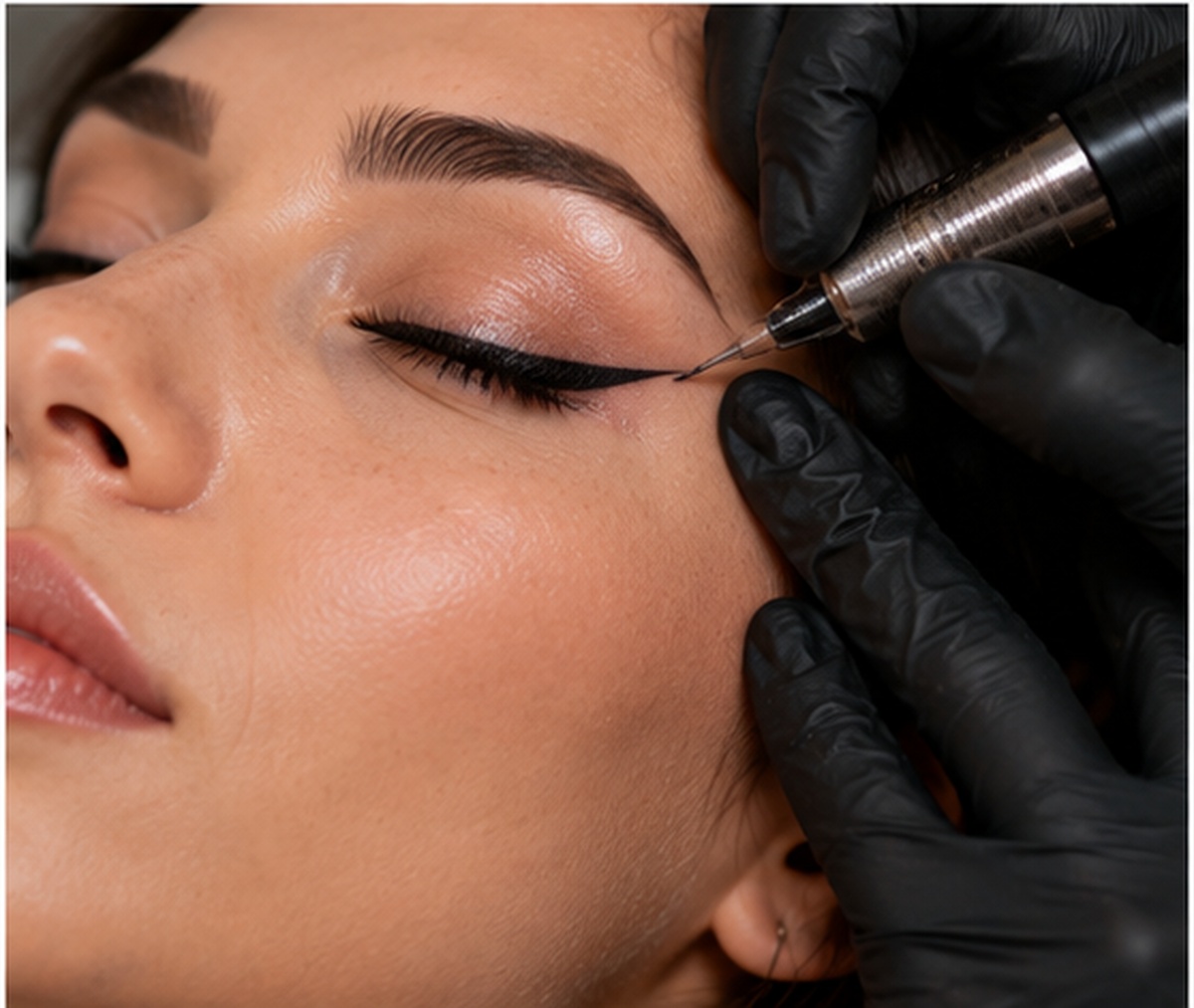
Permanent makeup: before, immediately after, and healed – brow, eyeliner, and lip procedures
Permanent makeup, also known as permanent cosmetics, derma-pigmentation, micro-pigmentation, semi-permanent makeup and cosmetic tattooing,[1] is a cosmetic technique which employs tattoos (permanent pigmentation of the dermis) as a means of producing designs that resemble makeup, such as eye-lining and other permanent enhancing colors to the skin of the face, lips, and eyelids. It is also used to produce artificial eyebrows, particularly in people who have lost them as a consequence of old age, disease, such as alopecia areata, alopecia totalis, chemotherapy, or a genetic disturbance, and to disguise scars and hypopigmentation in the skin such as in vitiligo.[2] It is also used to restore or enhance the breast's areola, such as after breast surgery, or to give an illusion of more hair volume to the scalp.
The most widely documented first use of permanent makeup treatment was done by the famous U.K. tattoo artist Sutherland MacDonald.[3] In 1902, at his parlor, #76 Jermyn Str., London, he "perfected his method of giving a lasting complexion of the utmost delicacy to pale cheeks."[4] The tattooist George Burchett, a major developer of the technique in the 1930s, described in his memoirs how beauty salons tattooed many women without their knowledge, offering it as a "complexion treatment ... of injecting vegetable dyes under the top layer of the skin."[5][6] Permanent makeup became much more commonplace beginning in the 1970s and 1980s, when it was used to address hair and pigment loss due to disease,[7] and now it is considered very normal.[8]
One may opt for permanent makeup for a plethora of reasons. For some, it can replace the daily application of traditional makeup products in favor of a more lasting solution.[9] This is especially useful for older women whose eyesight might not be good enough to apply the makeup[10] or who have degenerative diseases such as Parkinson's which severely limits motor ability.[7] Others may have the procedure to restore color areas that have lost it due to disease. This includes micro pigmentation for people with alopecia and vitiligo, and areola recoloring for breast cancer patients. Permanent makeup is also a common practice in some African cultures, who use certain tattoos to signify status.[8][2]
As with any tattoo, there are cases of undesired results, whether that be from the initial application or degradation over time.[11] Since this is the case, patients should come in with realistic expectations of what the makeup will look like.[10] One factor that heavily influences how the cosmetic tattoo looks is skin tone. This is because the same color may look different on different skin tones. Another factor that affects the appearance of these tattoos is sun exposure and lifestyle, which can fade the tattoos.[12]
As with any occupation, permanent makeup technicians need to complete required training in order to practice, although these requirements vary from state to state. The average technician completes an apprenticeship around nine months in length; however, certification programs vary from a single day to four years.[1][10] Once they complete their certification, the technician must submit various documents, including proof of certification, apprenticeship, and insurance, before practicing.[10]
Permanent cosmetics technicians are urged to comply with "standard precautions" and a uniform code of safe practice while performing cosmetic tattooing procedures.[13][14] This includes assessing whether the patient should receive permanent makeup at all and informing adequately informing them about the risks associated with the practice.[10]
In a study done regarding the possible complications of permanent makeup, the most common side effects were itching, redness, and the occasional swelling, all of which tended to heal after a few days.[15] While uncommon, permanent makeup can potentially come with more serious complications, including allergic reactions to the pigments, infection, granulomas, keloids, bleeding, crusting, loss of eyelashes, or general damage to the tattooed area.[11][16] Although properly trained technicians will maintain sterile conditions during application,[17] the use of unsterilized tattooing instruments may also infect the patient with serious diseases such as HIV and hepatitis.
On very rare occasions, people with permanent makeup have reported swelling or burning in the affected areas when they underwent magnetic resonance imaging (MRI).[18] Nevertheless, most such cases indicated that poor quality pigments, pigments adulterated with heavy metals, and pigments with diamagnetic properties may have been the causative factors.[19][20] Permanent makeup can also reportedly affect the quality of an MRI image, however, complications can be avoided as long as medical professionals are previously informed.[11]
In the United States, the inks used in permanent makeup are subject to approval as cosmetics by the Food and Drug Administration. While certain pigments in tattoos lack FDA approval for use in permanent cosmetics, competing public health priorities and lack of safety problems have consequently caused loose regulations around what color pigments tattoo inks can contain. Thus, there is little regulation on the type of inks used, with some pigments not approved for skin contact or refined only to an industrial-grade level, i.e. printers' ink, automobile paint, etc..[21]
If a tattooist lacks proper training, patients run the risk of the artist injecting the ink too deep into their skin, causing the pigment to migrate into the surrounding tissue. As a result, the makeup may appear blurry and lack definition for thin line work.[11] Due to their lymphatic distribution, older patients may have an increased risk for pigment migration following permanent eyelash makeup,[22] although migration is generally avoidable by not over-working swollen tissue. Removing migrated pigment is a difficult and complicated process, so it must be avoided if possible.[23]
As with tattoos, permanent makeup can be difficult, or even impossible, to remove.[12] Common techniques used for this are laser tattoo removal, dermabrasion (physical or chemical exfoliation), and surgical removal.[23] Different types of chemical removals have also become a popular option for permanent makeup removal.
Not with modern medical-grade pigments. The blue and green fading came from old tattoo inks; today's permanent makeup pigments are formulated to fade uniformly and true to tone. Choosing a experienced Mississauga artist who selects the right pigment for your skin is what prevents undesirable undertones, which Xtremities does for each client.
How long does an eyebrow tattoo last?
An eyebrow tattoo generally lasts one to three years before a refresh, depending on skin type, lifestyle, and technique. The colour fades gradually, and a touch-up after initial healing perfects the result. Periodic refreshes keep the brows looking their best. Xtremities helps Mississauga clients plan the right refresh timing.